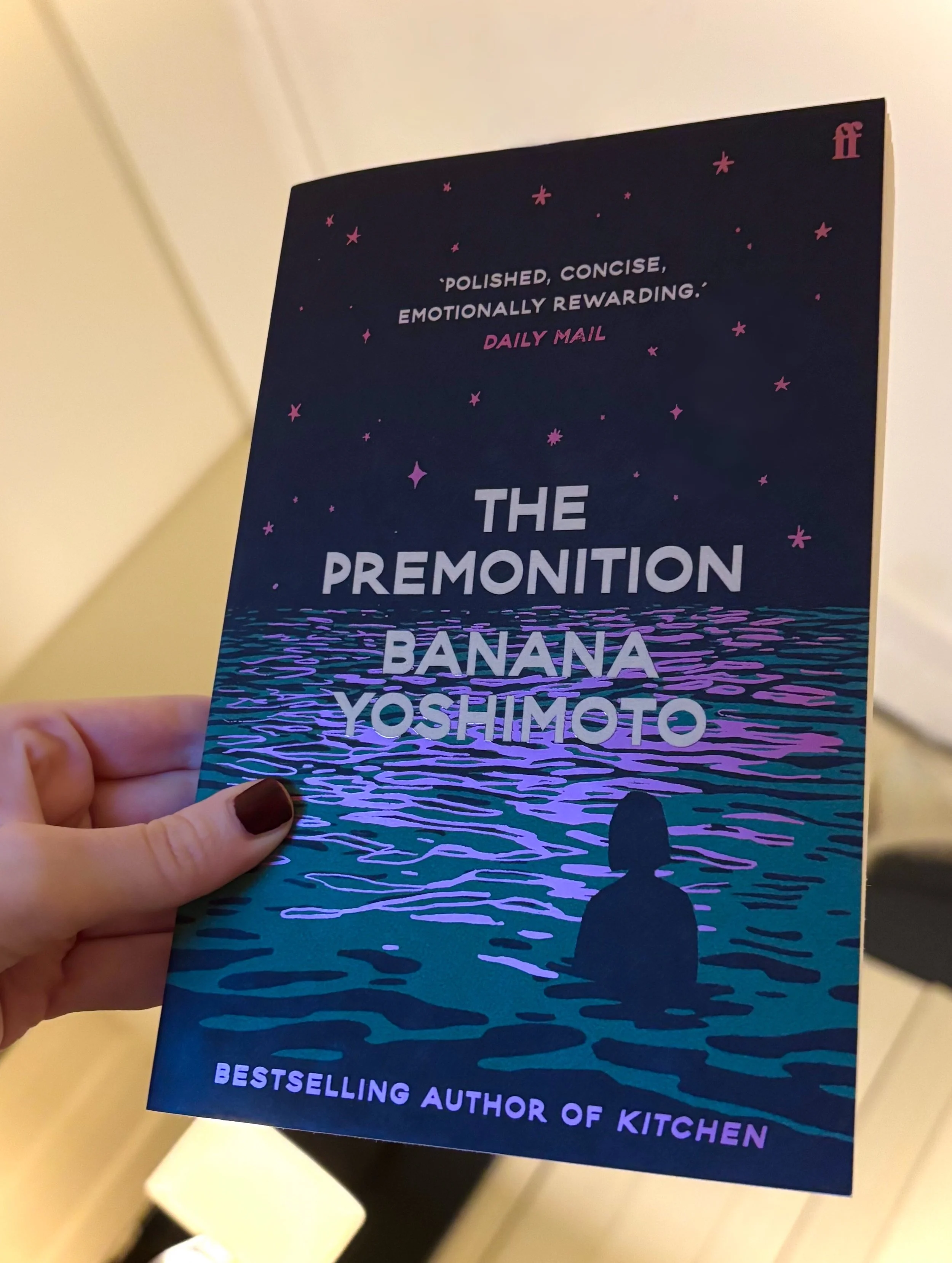
The Premonition
by Banana Yoshimoto
A Book Review
The Premonition … another banger from Banana
Having absolutely loved Banana Yoshimoto’s debut book Kitchen, I was interested to dive into her literary universe once again – with The Premonition, another coming-of-age tale set in Tokyo.
For some brief context, the story follows Yayoi - an ethereal 19-year-old woman, who’s raised by her loving adoptive family. But, beneath the surface of her calm suburban life, Yayoi senses a dark history is lurking… uncanny fragments of memory, an unshakable feeling of déjà vu, cause her to question whether she’s erased something from her past.
Haunted by this sixth sense, Yayoi sets about unearthing her roots – seeking answers to familial secrets, i.e. the mysterious circumstances of her adoption. No spoilers here, but as Yayoi joins the dots - rewriting her own personal mythology in the process - she begins to heal the emotional wounds carried from her past. What I loved most about the book was the idea that life’s messiness, all its imperfections, can be a route to discovering connection – and what it really means to feel at home.
A couple of things stood out to me in the book. Firstly, the dialogue is so sparse and unemotional, almost inhuman – it reminded me of the way players speak in video games. When you compare this with the beauty of the book’s internal monologues (which frame the world like it’s living poetry)... it creates a disruptive contrast. It seemed to me there’s an unbridgeable gap between the characters’ inner worlds and the way they act in the physical one.
At one point, Yayoi criticises her aunt for speaking to her boyfriend coldly, like he’s “the person who came to read the gas meter”. This felt quite hilarious/hypocritical when literally all of Yoshimoto’s characters are guilty of this way of interacting. But it never reads as a flaw or a quirk of translation (Japanese → English). It feels intentional - creating a deliberate kooky and off-kilter vibe. Yoshimoto’s characters say less, and in the space between their words we’re left to fill the gaps – plastering over their elliptical, matter-of-fact awkwardness.
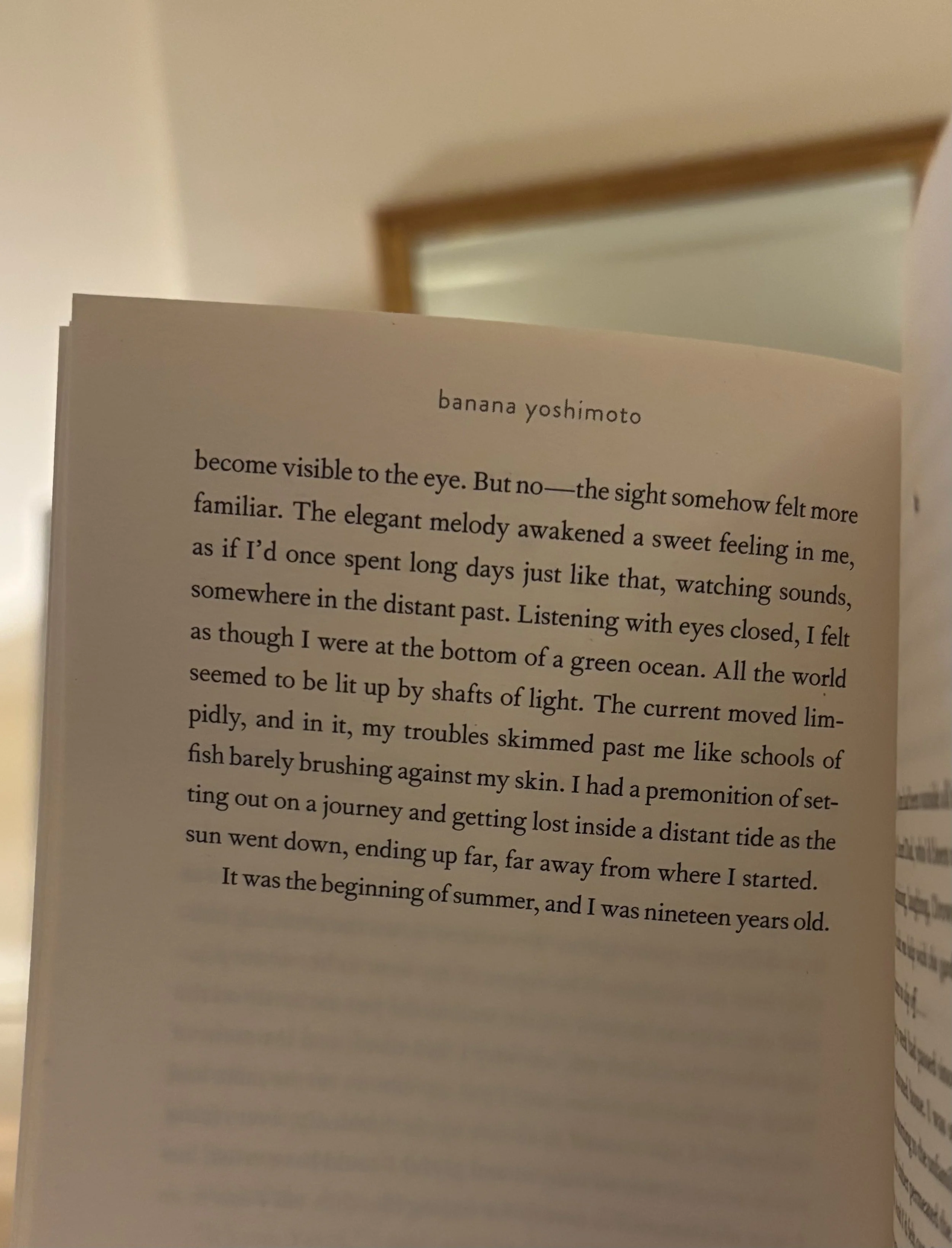
Also in the book, the senses blur constantly: for example, sounds are not heard, but rather seen and felt. Stepping “into the silence,” seeing the sounds of a piano etc. The narrative mimics the slippery feel of memory itself - where every sensation becomes part of a melting pot, and our sense of what’s certain dissolves. Reality becomes untrustworthy. And yet, despite its cosmic, otherworldly drift, I felt The Premonition – just like Kitchen – fixes on something comforting: the possibility that there’s resolution to be found in imperfection. And that life is always more than the sum of its observable parts.